
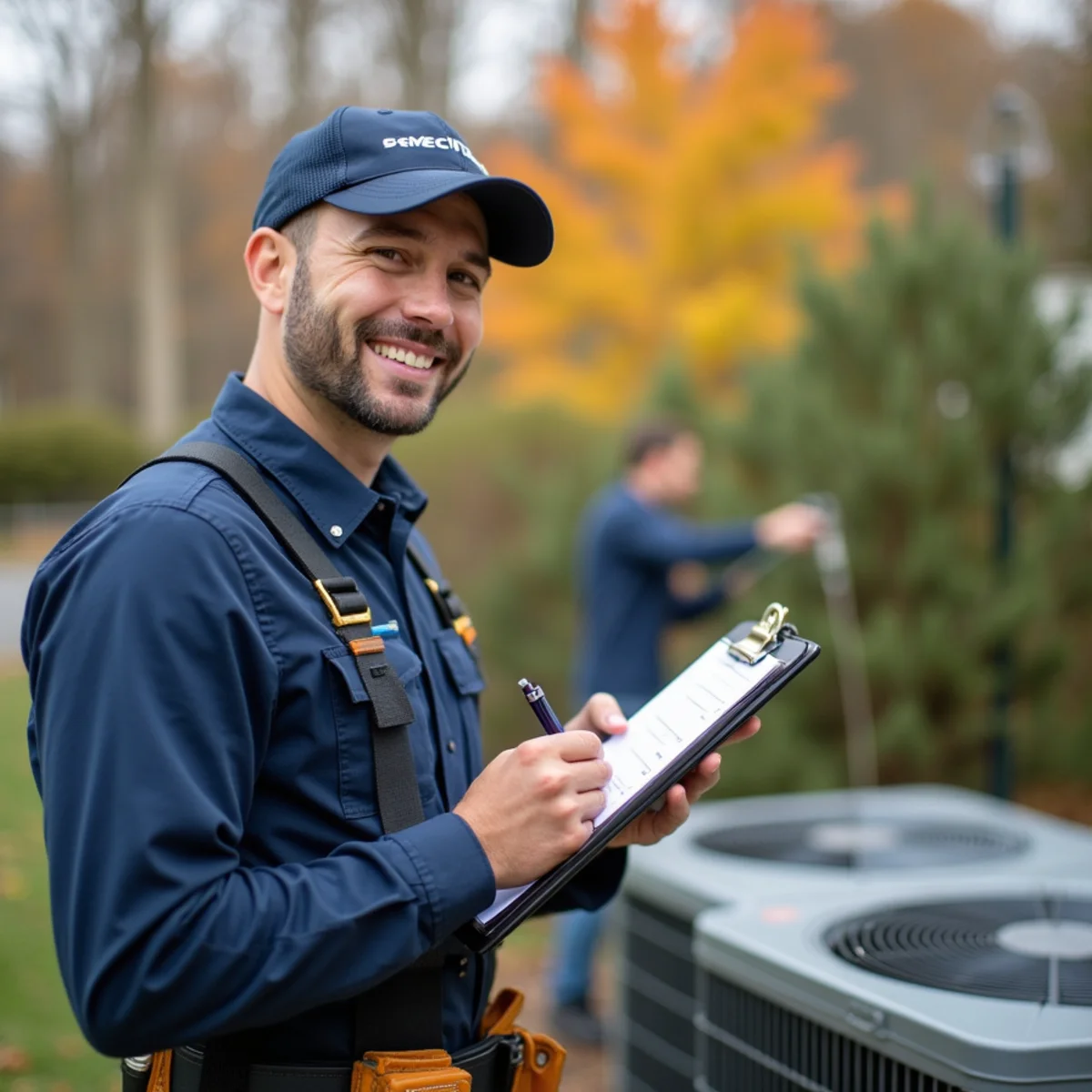
A thorough seasonal tune-up prevents up to 85% of unexpected HVAC breakdowns. Spring maintenance should focus on outdoor condenser coil cleaning, capacitor and contactor testing, condensate drain flushing, and refrigerant subcooling checks. Fall maintenance requires testing burner ignition sequences, cleaning flame sensors, inspecting heat exchangers for cracks, testing safety switches, and verifying heat pump defrost operation.
The seasonal tune-up imperative: avoiding emergency calls during July heatwaves and January freezes
In Harford County, HVAC systems operate under extreme seasonal swings. Summer brings 95°F temperatures with 80% Chesapeake Bay humidity, pushing air conditioners and heat pumps into 14-hour daily duty cycles. Winter brings biting polar vortex freezes dipping into the teens, forcing furnaces and heat pump compressors into continuous cold-climate operation.
According to industry data from the Indoor Air Quality Association (IAQA) and ACCA, over 80% of catastrophic mid-season HVAC breakdowns are directly caused by neglect and lack of preventative maintenance. A layer of dirt just 1/16th of an inch on an indoor evaporator coil reduces efficiency by 21%, while an uncleaned condenser coil forces compressor discharge pressures to skyrocket, cutting motor lifespan in half.
The Comprehensive Spring Cooling Inspection Checklist (21-point evaluation)
Spring maintenance should be scheduled in April or May before the first prolonged heat wave hits Bel Air. A certified technician performs rigorous mechanical, electrical, and refrigeration tests:
Essential spring cooling tune-up checkpoints:
- Chemical Condenser Coil Cleaning: Removing winter road grime, dandelion fluff, and pollen trapped between micro-channel aluminum fins.
- Refrigerant Charge Verification: Measuring subcooling (for TXV systems) and superheat (for piston systems) with digital manifolds to ensure precise charge.
- Capacitor Microfarad (µF) Testing: Measuring start and run capacitors with a multimeter; replacing any unit drifting more than 5% outside manufacturer tolerance.
- Contactor Pit & Burn Inspection: Checking high-voltage electrical contact points for carbon pitting or ant infestation that cause intermittent compressor lockouts.
- Condensate Trap & Drain Line Jetting: Clearing algae and bacterial sludge from the primary condensate drain and testing float safety shutoff switches.
- Blower Wheel & Motor Amperage: Inspecting squirrel-cage blower fins for dust accumulation and measuring running amp draw against motor nameplate ratings.
The Comprehensive Fall Heating Safety & Efficiency Checklist
Fall maintenance, completed in September or October, shifts the focus heavily toward combustion safety, flue gas venting, and heat pump defrost cycle readiness:
Critical fall heating inspection checkpoints:
- Heat Exchanger Integrity Inspection: Inspecting burner cells, crimped seams, and primary tubes with high-resolution fiberoptic borescopes for hairline thermal stress fractures.
- Flame Sensor Polishing: Cleaning microscopic oxidation from the silicon carbide or electronic flame rod to eliminate short-cycling burner dropouts.
- Combustion Gas Analysis: Measuring carbon monoxide (CO), oxygen (O2), and stack temperature in the flue to verify stoichiometric burner efficiency.
- Draft Inducer Motor & Pressure Switches: Testing negative draft pressure in inches of water column (W.C.) to guarantee safe exhaust clearance.
- Heat Pump Reversing Valve & Defrost Sensor: Verifying seamless switching from cooling to heating mode and testing outdoor coil temperature sensors.
- Auxiliary Electric Heat Strip Staging: Checking sequencer relays and amp draw on emergency electric resistance heating elements.
Capacitor testing, amp-draw benchmarks, and proactive component replacement
The single most common cause of an air conditioner failing to start on a 90°F Saturday is a blown dual run capacitor. Capacitors store electrical energy to give compressor and condenser fan motors the torque required to spin up. Under Maryland summer attic and outdoor heat, capacitor dielectric fluid degrades.
By testing microfarad ratings during routine spring service, technicians catch weak capacitors before they completely fail, preventing costly locked-rotor compressor damage and saving homeowners the frustration of emergency weekend service fees.
The homeowner monthly DIY maintenance schedule
While mechanical and combustion testing requires certified gauges and instruments, homeowners play a vital role in routine upkeep. Clear vegetation within 24 inches of the outdoor unit, rinse outdoor condenser panels gently with a garden hose (never a pressure washer), ensure indoor supply vents are not obstructed by furniture, and inspect air filters every 30 days.
Frequently Asked Questions
Quick answers based on Harford County equipment and climate realities.
How often should I change my air filter in Maryland?
Standard 1-inch fiberglass filters should be inspected every 30 days and replaced at least every 60 days. High-capacity 4-inch or 5-inch media filters (such as Honeywell or Aprilaire) typically last 6 to 9 months. If you have pets, indoor allergies, or are doing home renovations, inspect filters monthly.
Does seasonal maintenance really lower my monthly utility bills?
Yes. Operating a heating or cooling system with dirty coils, improperly adjusted blower speeds, or slightly low refrigerant charge forces motors to run longer and draw higher amperage. ACCA studies confirm that regular seasonal maintenance restores up to 15% of lost operating efficiency.
Is a spring tune-up necessary if my AC worked fine last summer?
Yes. An air conditioner can seem to run normally while suffering from a failing capacitor, restricted condensate line, or dirty coils. Left unaddressed, the added thermal strain during the first prolonged heat wave often leads to sudden catastrophic failure at the peak of summer.
What is the difference between a quick filter change and a professional tune-up?
A filter change only addresses basic air filtration. A professional 21-point tune-up includes electrical microfarad testing, motor amp draw measurements, refrigerant superheat/subcooling calculations, condensate chemical flushing, combustion efficiency analysis, and safety switch testing.
Have a specific question about your HVAC system?
Related Bel Air HVAC Services & Coverage Areas
Have Questions About Your Heating or Cooling System?
Speak directly with a local dispatcher who knows Harford County equipment, fuel lines, and climate requirements.
Bynum Run Air Experts
Serving Bel Air, MD 21014 and nearby areas
Open 24 hours, 7 days a week