
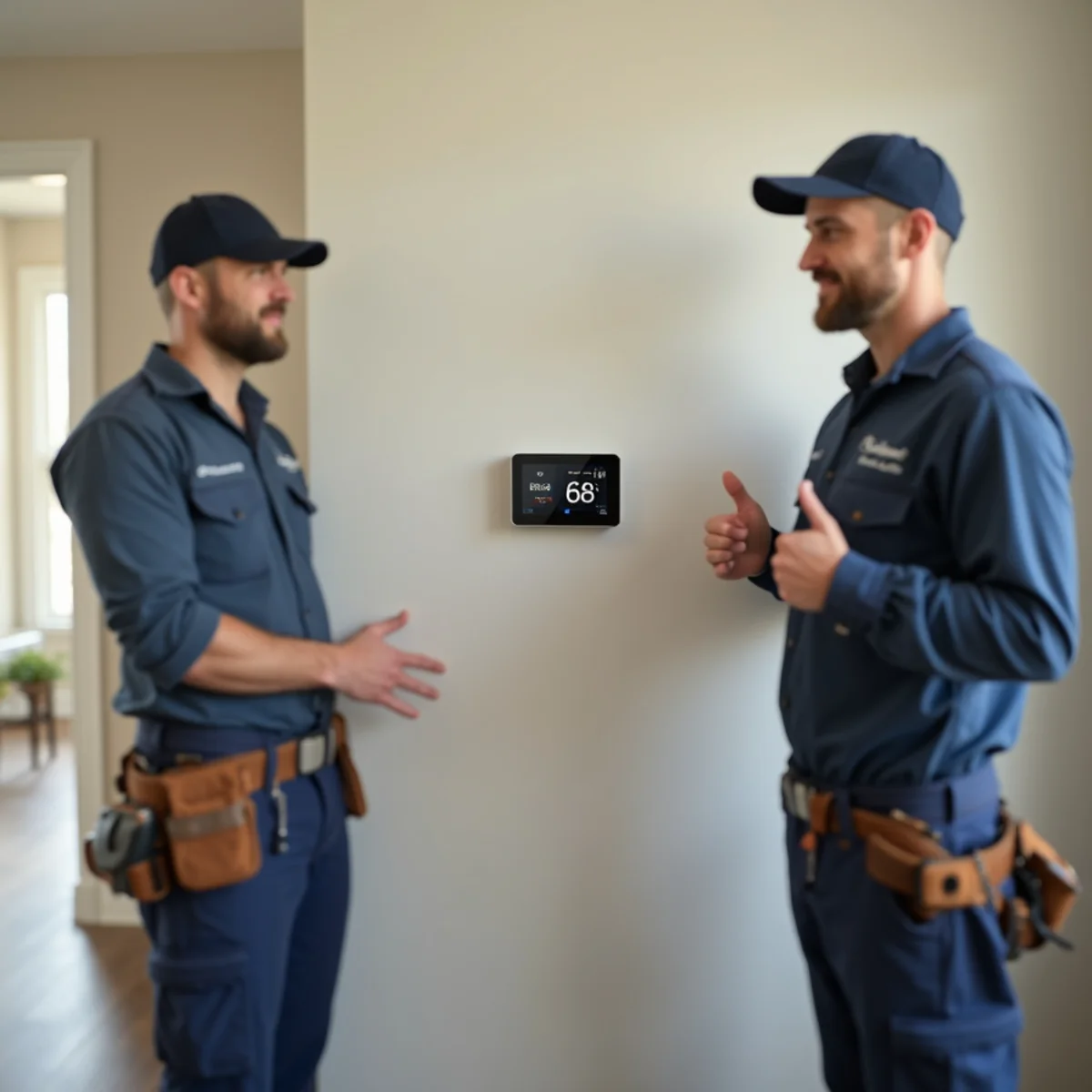
The golden rule for heat pump thermostats in winter is: "Set it and forget it." Unlike gas furnaces where turning down the thermostat 5 to 8 degrees at night saves money, dropping a heat pump temperature causes it to engage expensive auxiliary electric resistance heat strips when recovering in the morning. Maintain a steady setpoint between 68°F and 70°F day and night to keep operating costs low.
Why the conventional furnace setback rule backfires on electric heat pumps
For generations, homeowners with natural gas, propane, or oil furnaces were taught to dial their thermostats down 7 to 10 degrees at night or while at work to save on heating bills. With combustion furnaces, recovery is rapid and linear: when the thermostat calls for heat in the morning, burners fire at full BTU output, quickly reheating the structure with no efficiency penalty.
Applying this same setback strategy to a standard residential heat pump in Maryland will backfire dramatically. Heat pumps heat gradually by extracting ambient thermal energy from outdoor air. When a heat pump is tasked with raising indoor temperatures by 3 degrees or more all at once, modern digital thermostats determine that the compressor is falling behind and automatically energize secondary electric resistance heat strips.
The high cost of auxiliary electric resistance heat strips (AUX/EM heat)
Auxiliary heat strips inside your indoor air handler function essentially like a giant toaster: electricity flows through heavy nichrome wire coils. While an inverter heat pump operating at 35°F delivers a Coefficient of Performance (COP) of 3.0 to 3.8 (delivering over $3 of heat for every $1 of electricity consumed), resistance heat strips have a COP of exactly 1.0.
Electric heat strips consume between 10 and 15 kilowatts per hour. When auxiliary heat kicks on during a 6:00 AM setback recovery, your electric meter spins rapidly. That single hour of electric resistance recovery often consumes more kilowatt-hours than the heat pump would have used maintaining a constant 68°F temperature all night long.
The ideal winter setpoint: why 68°F is the thermodynamic sweet spot
For maximum comfort and the lowest BGE electric bills in Harford County, HVAC industry standards recommend setting your heat pump thermostat to 68°F in winter and leaving it there 24 hours a day.
Maintaining a steady indoor thermal mass keeps exterior drywall, furniture, and flooring warm. The heat pump runs extended, low-wattage cycles that continuously filter indoor air and maintain comfortable humidity levels without triggering expensive resistance staging.
Configuring smart thermostats for heat pumps (Ecobee, Nest, and Honeywell)
Smart thermostats can deliver excellent energy savings with heat pumps, but ONLY if their staging algorithms are calibrated correctly for Harford County winter design temperatures (14°F ASHRAE design temp for Bel Air):
Smart thermostat heat pump configuration guidelines:
- Ecobee Compressor-to-Aux Delta: Set the staging delta to 3°F or 4°F (manual staging) rather than auto staging to prevent premature resistance engagement.
- Ecobee Aux Heat Lockout: Program an outdoor auxiliary lockout temperature of 25°F or 30°F so heat strips cannot engage during mild 40°F weather.
- Nest Heat Pump Balance: Select the "Max Savings" setting, which prioritizes the compressor and delays electric heat strips unless temperatures drop precipitously.
- Ramping / Early-On Recovery: Enable smart recovery features so the thermostat gently nudges the temperature up over 2 to 3 hours using only the heat pump.
The emergency heat (EM HEAT) setting: when to use it and when to leave it alone
Your thermostat includes a manual "Emergency Heat" (EM HEAT) setting. Switching to EM HEAT completely locks out the outdoor compressor and forces your home to run 100% on electric resistance strips.
You should ONLY switch to EM HEAT if your outdoor heat pump has suffered a mechanical breakdown (e.g., seized motor, shattered fan blade, severe ice-encasement) or is producing an alarming grinding noise while you await an emergency technician. Running on EM HEAT for routine winter comfort will cause your monthly electric bill to double or triple.
Frequently Asked Questions
Quick answers based on Harford County equipment and climate realities.
Can I use a smart thermostat with my heat pump?
Yes, but it must be configured specifically for heat pump staging. Features like auxiliary heat lockout (preventing heat strips from turning on above 25°F or 30°F outdoor temperature) and compressor min run time must be properly calibrated so the system does not waste electricity on resistance heat during mild winter days.
When should I manually turn on emergency heat (EM HEAT)?
Only switch to EM HEAT if the outdoor heat pump is completely out of commission—such as when the fan motor has failed, the unit is encased in solid ice following a freezing rain storm, or the compressor has tripped its breaker. Never use EM HEAT for normal daily heating, as it relies 100% on expensive electric resistance strips.
Why does my heat pump blow cool air when it starts up in winter?
Heat pumps deliver air at registers between 90°F and 100°F, compared to gas furnaces which blow 120°F to 135°F air. Because your normal body temperature is 98.6°F, air blowing at 92°F feels slightly cool or drafty to human skin even though it is actively heating your 68°F room.
Is it normal for steam or vapor to rise from my outdoor heat pump in winter?
Yes, completely normal. In winter, frost naturally accumulates on the outdoor coil. Every 30 to 90 minutes, the heat pump enters a defrost cycle: it temporarily reverses into cooling mode to heat the outdoor coil, melting frost. The rising "smoke" is harmless water vapor and steam.
Have a specific question about your HVAC system?
Related Bel Air HVAC Services & Coverage Areas
Have Questions About Your Heating or Cooling System?
Speak directly with a local dispatcher who knows Harford County equipment, fuel lines, and climate requirements.
Bynum Run Air Experts
Serving Bel Air, MD 21014 and nearby areas
Open 24 hours, 7 days a week