
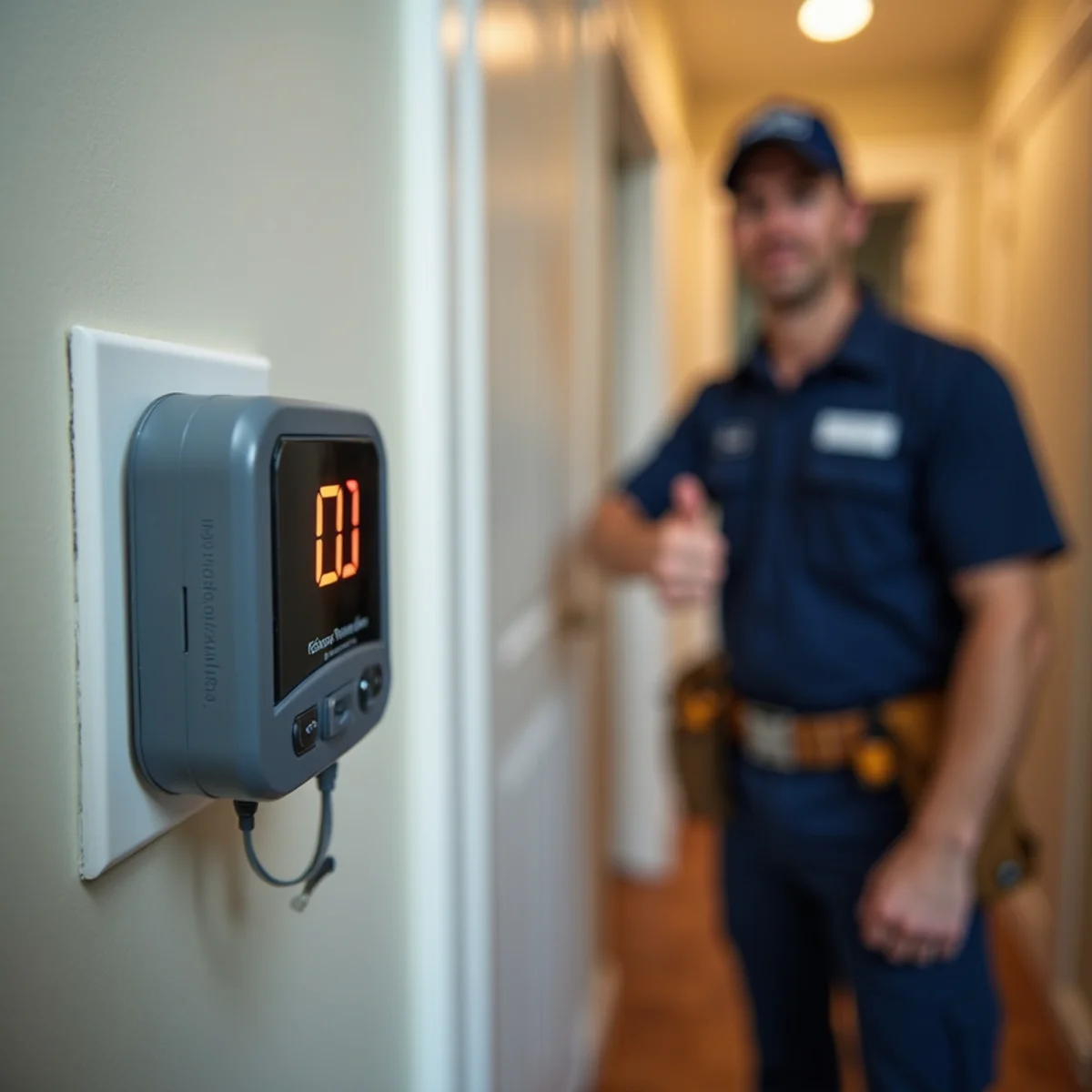
Carbon monoxide (CO) leaks from residential furnaces occur when the heat exchanger develops hairline stress cracks, rust holes, or breached gasket seams. Warning signs include yellow or flickering burner flames instead of crisp blue cones, heavy soot buildup around furnace panels, water condensation on cold windows, physical flu-like symptoms (headaches, nausea, dizziness) that improve when away from home, and sounding CO detectors. If your CO detector alarms, leave the house immediately and call 911.
The silent threat: how carbon monoxide is produced and leaks into breathing air
Carbon monoxide (CO) is a colorless, odorless, tasteless, and non-irritating toxic gas produced during the incomplete combustion of fossil fuels (natural gas, propane, and #2 heating oil). In a normally operating furnace, the combustion process is completely isolated within a sealed steel chamber called the heat exchanger.
The heat exchanger allows burner flames on the inside to heat the exterior metal walls. The indoor blower fan pushes household breathing air across the outside of these hot metal surfaces, warming the air before delivering it to bedrooms and living spaces. If the heat exchanger develops even a hairline crack or rusted seam, toxic exhaust gases—including carbon monoxide, sulfur dioxide, and nitrogen oxides—are pulled directly into the airstream and distributed throughout your home.
The mechanics of heat exchanger metal fatigue and microscopic stress fractures
Every time your furnace ignites, the aluminized steel or stainless steel heat exchanger tubes heat from 65°F to over 500°F within 90 seconds, causing significant metal thermal expansion. When the burner cycle ends, the metal cools and contracts. Over 15 to 20 Maryland winters (representing more than 100,000 thermal expansion cycles), the metal curves and crimped weld joints experience severe metal fatigue.
This wear is accelerated exponentially by restricted airflow. Operating a furnace with dirty air filters or oversized burners traps intense heat inside the cabinet, overheating the metal beyond its metallurgical yield point and causing brittle stress fractures along factory bends.
Visible and sensory red flags of a compromised furnace
While carbon monoxide itself cannot be seen or smelled, a malfunctioning combustion process displays distinct physical warning signs that every homeowner should recognize immediately:
Critical warning signs of furnace combustion failure:
- Yellow, Lazy, or Flickering Burner Flames: Healthy natural gas and propane flames burn with crisp, steady blue cones. Yellow, wavy, or sputtering flames indicate incomplete combustion and dangerously elevated CO production.
- Heavy Soot or Rust Streaks: Dark carbon deposits around burner access doors, flue pipe joints, or draft hood collars signal unburned fuel and exhaust backdrafting.
- Unusual Condensation on Windows: Moisture condensing on cold window panes in rooms without boiling pots or showers can indicate excess water vapor and flue gas spillage into the living space.
- Unexplained Physical Symptoms: Headaches, nausea, dizziness, fatigue, and stinging eyes that affect multiple family members simultaneously and mysteriously disappear when leaving the home.
Electronic combustion analysis vs. fiberoptic borescope inspection
A superficial visual inspection with a flashlight is rarely sufficient to identify early heat exchanger breaches, as over 80% of cracks occur on the interior curves of crimped cell plates hidden behind sheet metal baffles. Bynum Run Air Experts utilizes dual-method diagnostic verification:
Professional heat exchanger diagnostic protocols:
- High-Resolution Fiberoptic Borescope: Flexible articulated micro-cameras snake through limit switch openings to visually inspect every internal weld, dimple, and seam on high-definition monitors.
- Electronic Flue Gas Combustion Analyzer: Calibrated chemical sensors measure exact parts-per-million (PPM) of carbon monoxide in both the flue pipe and the ambient supply air plenum before and after the blower starts. A drop in flue CO or a spike in plenum CO when the blower kicks on confirms a cracked exchanger.
Life-saving safety protocols: detector placement and low-level CO monitors
Under Maryland law, every residential dwelling with fuel-burning appliances or an attached garage must have working carbon monoxide alarms. However, standard retail alarms certified under UL 2034 are designed solely to prevent death in healthy adults, waiting until concentrations reach 70 PPM for up to 4 hours before sounding.
For vulnerable family members (infants, elderly relatives, and individuals with cardiovascular disease), exposure to low levels (15 to 30 PPM) over days causes chronic health complications. Consider installing professional low-level CO monitors that provide digital real-time PPM readouts and alert at 15 PPM.
Frequently Asked Questions
Quick answers based on Harford County equipment and climate realities.
Can a cracked heat exchanger be repaired or welded?
No, absolutely not. Industry standards (including NFPA and ANSI codes) and all furnace manufacturers strictly prohibit welding, gluing, or patching residential heat exchangers. Extreme thermal expansion and contraction will reopen any patch within days. A cracked heat exchanger must either be replaced with a factory OEM part under warranty or the entire furnace replaced.
Where should I install carbon monoxide detectors in my Harford County home?
Install a CO detector on every level of your home, with mandatory placement directly outside each sleeping area and at least 15 to 20 feet away from fuel-burning appliances. Place detectors at roughly eye level or on ceilings (avoiding corners or dead-air zones behind curtains) and test batteries monthly.
What is the difference between standard retail CO alarms and low-level monitors?
Standard UL 2034 alarms bought at hardware stores will not sound until CO levels remain at 70 PPM for 1 to 4 hours or 400 PPM for 15 minutes. Low-level digital CO monitors (such as NSI 3000) display real-time readouts starting at 5 PPM and sound alerts at 15 PPM, protecting unborn infants, young children, and elderly residents from chronic low-level poisoning.
What should I do immediately if my carbon monoxide alarm sounds?
Evacuate all household occupants and pets outside into fresh air immediately. Do not stop to open windows or investigate the furnace. Once safely outside, call 911 from your cell phone or a neighbor’s house. Do not re-enter the home until emergency first responders declare the structure safe.
Have a specific question about your HVAC system?
Related Bel Air HVAC Services & Coverage Areas
Have Questions About Your Heating or Cooling System?
Speak directly with a local dispatcher who knows Harford County equipment, fuel lines, and climate requirements.
Bynum Run Air Experts
Serving Bel Air, MD 21014 and nearby areas
Open 24 hours, 7 days a week